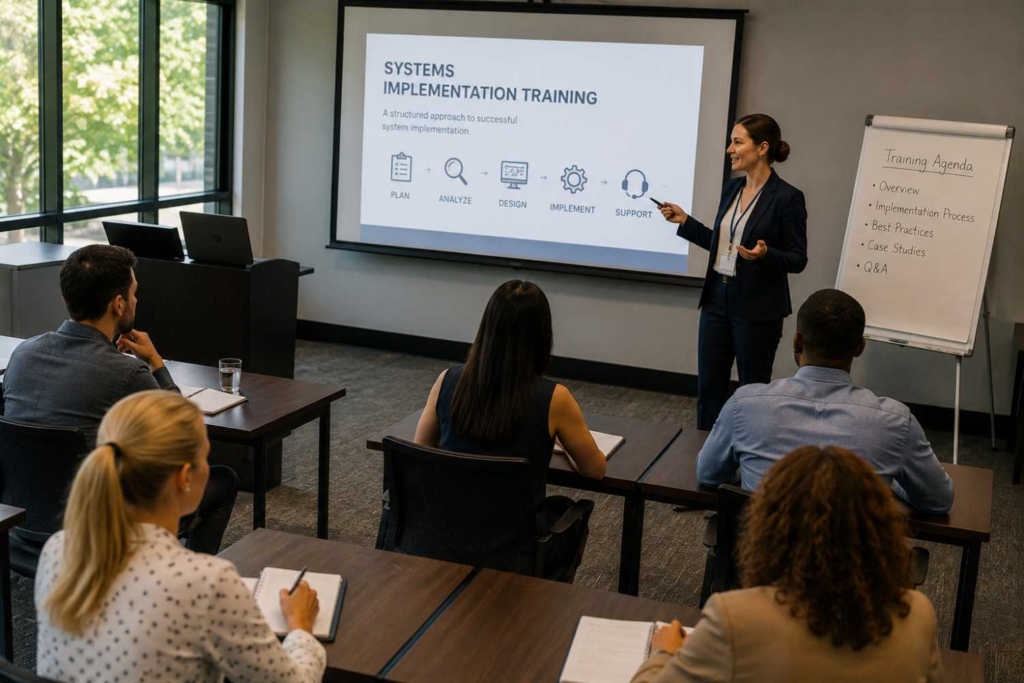
Strong systems implementation training helps people learn new tools with less stress. It gives users the skills they need to do their work with confidence. Good training also helps teams adjust faster. This leads to better results and fewer problems.
Many companies invest in systems implementation training because it supports daily work. It helps people understand new tasks and follow clear steps. The same idea applies when learning the truth about real estate or understanding the real estate market. Clear guidance helps people make better decisions.
Better User Adoption
People use new systems with more confidence when they get proper training. They understand what to do and how to do it.
Benefits include:
- Faster learning
- Better confidence
- Less confusion
- Higher user satisfaction
Employees feel more comfortable when they know what to expect.
Fewer Errors
Training helps people avoid common mistakes. Users learn the right steps from the start. This lowers the chance of errors that can slow work down.
Good training can help teams:
- Reduce mistakes
- Follow the right process
- Improve work quality
- Save time
Improved Productivity
People work faster when they know how to use a system. They spend less time asking questions and fixing problems.
Teams can:
- Finish tasks sooner
- Work with fewer delays
- Improve daily results
- Focus on important work
Better knowledge leads to better performance.
Easier Workflow Changes
New systems often bring changes to daily work. Training makes these changes easier to manage. People learn new steps in a simple way.
Clear training helps teams:
- Adapt to changes faster
- Work together better
- Stay organized
- Keep projects moving
When employees understand the process, they can handle change with less stress.
Key Stages of Systems Implementation Training
Good systems implementation training helps people learn new tools and processes with less stress. It gives teams the knowledge they need to do their work well. A clear training plan also helps people adjust to change and use new systems with confidence. Successful systems implementation training follows several key stages. Each stage helps users learn the system and avoid problems during daily work.
Needs Analysis
The first step is to understand what employees need to learn. Every team has different skills and experience. Finding skill gaps helps companies create better training plans.
This stage helps teams:
- Identify missing skills
- Understand employee strengths
- Learn what staff members already know
- Set clear training goals
Clear goals make training easier to follow.
Role-Based Curriculum
Not everyone uses a system in the same way. Each department has different tasks. Training should match those tasks.
Examples include:
- Finance teams learn billing and reports.
- Operations teams learn daily processes.
- Managers and supervisors learn tracking and planning tools.
- Support teams learn how to help users.
Role-based lessons help employees focus on the tasks they perform each day. This approach also works in specialized programs, such as AI training for real estate agents and AI workshop for real estate teams.
User Acceptance Testing
Testing helps users practice before the full launch. People use the system in real work situations. This step helps teams find issues early.
User acceptance testing helps:
- Find problems before launch
- Check if the system meets business needs
- Improve user confidence
- Reduce stress during rollout
Real-world practice makes users feel ready.
Post-Implementation Support
Training should continue after the system goes live. Users may still need help as they learn new tasks.
Companies can provide support through:
- Help desks
- Training guides
- Videos and manuals
- In-app tips and instructions
- Ongoing assistance from support teams
Continued support helps users stay productive. It also helps teams solve problems faster and get the most value from the new system.
Common Types of Systems Implementation Training
Companies use different training methods to help employees learn new systems. Good systems implementation training makes learning easier and helps users feel more confident. The right approach depends on the needs of the team and the type of system. Strong systems implementation training often combines several methods. This gives users more ways to learn and remember important tasks.
Classroom Training
Classroom training brings employees together in one place. An instructor explains the system and answers questions.
Benefits include:
- Live guidance
- Group discussions
- Quick feedback
- Better teamwork
This method works well for large groups.
Online Training
Online training lets people learn from any location. Employees can join lessons with a computer or mobile device.
Online training offers:
- Flexible schedules
- Easy access to lessons
- Lower training costs
- Learning from home or work
Many companies use online programs for real estate marketing team training and AI training for real estate teams.
Hands-On Workshops
Hands-on workshops give users real practice. Employees learn by doing tasks instead of only reading about them.
This training helps users:
- Build confidence
- Learn faster
- Solve problems
- Understand daily tasks
Practice makes learning easier.
Video Tutorials
Video tutorials explain topics with clear steps. Users can pause and replay lessons when needed.
Video training helps people:
- Learn at their own speed
- Review lessons anytime
- Understand tasks better
Self-Paced Learning
Self-paced learning gives employees more control over their training. Users can learn when it fits their schedule.
Common learning tools include:
- Training guides
- Videos
- Online lessons
- Practice exercises
This method helps people learn without feeling rushed.
How to Build an Effective Systems Implementation Training Program?
A good training plan helps people learn new systems with less stress. Strong systems implementation training gives users the knowledge they need to do their work well. It also helps teams adjust to change and avoid mistakes.
Successful systems implementation training should focus on simple lessons and clear goals. A step-by-step approach helps employees learn faster and use the system with confidence.
Set Clear Goals
Start with clear goals. Employees should know what they need to learn and why it matters.
Clear goals can help teams:
- Stay focused
- Track progress
- Improve results
- Reduce confusion
Simple goals make training easier to follow.
Know Your Users
Every employee has different skills and needs. Some people may need more help than others.
Take time to learn:
- What users already know
- Which tasks they perform
- What skills they need
- Where they may need support
Knowing your users helps create better training.
Create Simple Training Modules
Break lessons into small parts. Simple lessons are easier to understand and remember.
Training materials can include:
- Videos
- Guides
- Practice tasks
- Online lessons
- Group sessions
Short lessons help users learn one step at a time.
Measure Progress
Check how users are doing during training. This helps you see if employees understand the system.
You can measure progress through:
- Quizzes
- Practice exercises
- Team reviews
- Performance reports
Regular checks help identify areas that need more attention.
Gather Feedback
Ask employees about their training experience. Their feedback can help improve future lessons.
Useful feedback may include:
- Parts that were easy to understand
- Topics that need more detail
- Questions users still have
- Suggestions for better learning
Listening to employees helps build stronger training programs.
Update Training Materials
Systems change over time. Training materials should change as well. Review your guides and lessons often. Update them when new features or processes appear. Current information helps employees stay productive and confident.
Common Challenges During Systems Implementation Training
Every company faces problems when introducing a new system. Good systems implementation training helps reduce these issues. It gives users the skills they need and helps teams adjust to change.
Even with careful planning, systems implementation training can face several challenges. The good news is that simple solutions can help teams stay on track.
Resistance to Change
Some employees may feel unsure about new systems. They may prefer old ways of working.
Simple solutions include:
- Explain the benefits clearly.
- Answer questions early.
- Provide step-by-step guidance.
- Give users enough time to learn.
Clear communication helps people feel more comfortable.
Limited User Knowledge
Not everyone starts with the same level of experience. Some employees may need extra help.
Ways to solve this problem include:
- Use simple lessons.
- Offer practice sessions.
- Provide easy guides.
- Give users time to ask questions.
Training should support all skill levels. This approach also helps improve business development skills in many industries, including those involved in buying property abroad.
Poor Communication
Confusing messages can slow down learning. Employees need clear information during the training process.
Helpful solutions include:
- Share updates often.
- Use simple words.
- Set clear expectations.
- Encourage team discussions.
Good communication keeps everyone informed.
Lack of Support
Employees may struggle if they cannot get help after training.
Companies can provide support through:
- Help desks
- Team leaders
- Online resources
- Follow-up training sessions
Quick support helps users solve problems faster.
Inadequate Training Materials
Poor training materials can confuse users. Long or complex guides often make learning harder.
Better training materials should include:
- Short guides
- Videos
- Pictures and examples
- Practice exercises
Simple and clear materials help users learn with confidence and improve their daily work.
Best Practices for Successful Systems Implementation Training
Good systems implementation training helps employees learn new systems with less stress. It also helps teams work better and avoid mistakes. Following a few simple steps can make training more successful.
Strong systems implementation training gives users the support they need from the start. It also helps companies improve user confidence and increase productivity.
Start Early
Training should begin before the new system goes live. Early training gives employees more time to learn and practice.
Benefits of starting early include:
- Less stress
- Better preparation
- Fewer mistakes
- Faster learning
Focus on Real Tasks
Training should cover the tasks employees do every day. Real examples make lessons easier to understand.
Useful training activities include:
- Practice exercises
- Step-by-step guides
- Real work examples
- Team activities
Hands-on learning helps users build confidence.
Encourage Questions
Employees should feel comfortable asking questions. Open discussions help people learn faster and avoid confusion.
Managers can:
- Listen carefully
- Give clear answers
- Provide extra help
- Create a positive learning environment
Offer Continued Support
Learning does not end after the system launch. Employees may still need help as they adjust.
Companies can provide support through:
- Help desks
- User guides
- Training videos
- Follow-up sessions
Track Results
Companies should check how well the training works. Tracking progress helps identify areas that need improvement.
Regular reviews can help teams:
- Measure success
- Find problems early
- Improve training materials
- Support long-term growth
These best practices help employees use new systems with confidence and achieve better results.