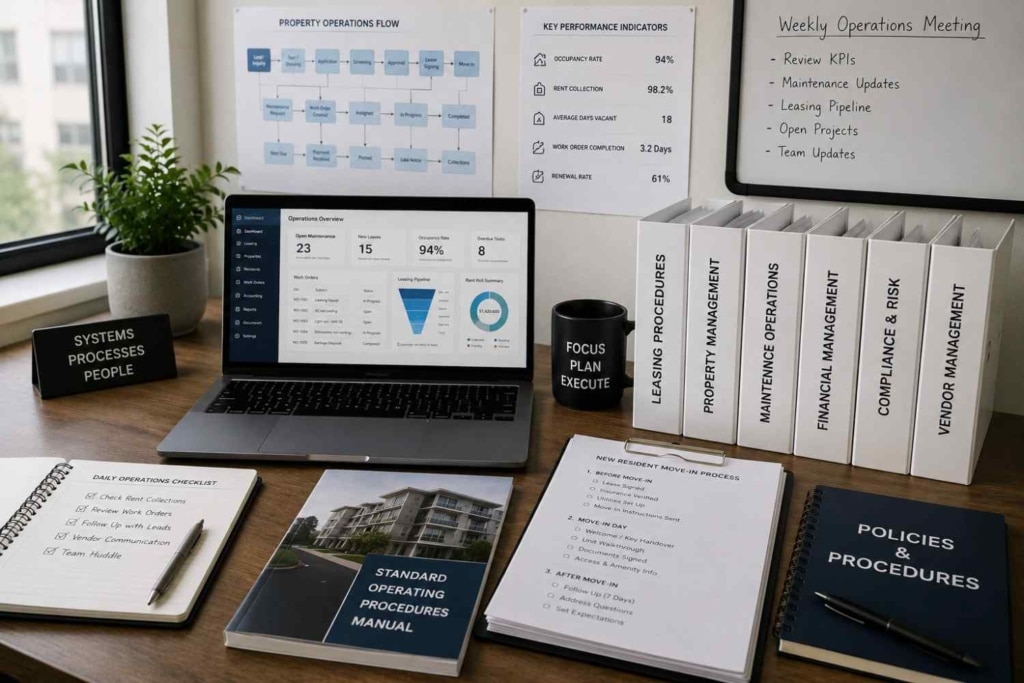
Strong operational systems and documentation help a business run smoothly. They give clear instructions for daily tasks. Everyone knows what to do and how to do it. This creates a more organized workplace and helps the business reach its goals.
When a company uses operational systems and documentation, team members can follow the same steps every time. This helps improve quality, reduce confusion, and create a better experience for clients.
Better Consistency Across the Business
Consistency helps a business deliver the same level of service each time. Clear systems guide employees through their work. This means tasks get completed in the correct way. For example, if every team member follows the same customer service process, clients receive the same high-quality support.
Benefits of consistency include:
- Better service quality
- More reliable results
- Clear expectations
- Stronger business reputation
Greater Accountability
People perform better when they know their responsibilities. Clear documentation shows who owns each task and process. Employees can check procedures when they need help. Managers can also track progress more easily.
For example, a documented sales process helps team members understand each step of the customer journey. It also makes it easier to see where improvements are needed.
Stronger Team Alignment
A business works best when everyone moves in the same direction. Clear documentation helps teams follow shared goals and standards. When employees use the same instructions, they communicate better and work together more effectively. This supports team process documentation and creates a more organized workplace.
Key benefits include:
- Better teamwork
- Clear communication
- Shared goals
- Less confusion
Fewer Mistakes and Less Rework
Mistakes can cost time and money. Clear instructions help reduce errors before they happen. Employees do not need to guess what comes next. They can follow proven steps and complete tasks with confidence.
For example, a documented onboarding process helps new employees learn faster and avoid common mistakes.
Faster Business Growth
Growth becomes easier when systems are in place. Business owners can delegate tasks without losing quality. New employees can learn faster because the instructions already exist. Teams can handle more work without creating confusion.
Good workflow improvement and documentation also help businesses identify better ways to complete tasks and support future growth.
Benefits of business growth systems include:
- Faster training
- Easier delegation
- Better productivity
- More efficient operations
A Better Customer Experience
Customers value reliable service. Clear systems help businesses meet customer expectations every time. When employees follow documented processes, clients receive accurate information and consistent support.
For example, a documented client onboarding process helps customers understand what to expect from the beginning. This builds trust and improves satisfaction.
Why Every Business Needs Clear Systems?
Every business depends on people, processes, and communication. Without clear guidance, mistakes can increase and productivity can decline. Well-written systems and documentation help teams stay organized, work efficiently, and deliver better results. They create a strong foundation for long-term success and help businesses grow with confidence.
The Main Components of Operational Systems and Documentation
Every successful business needs a clear plan for how work gets done. That is where operational systems and documentation become important. They help people follow the right steps, stay organized, and complete tasks the same way each time.
Think of operational systems and documentation like a guidebook for a business. They show team members what to do, how to do it, and what results the company expects.
Policies
Policies are the basic rules that guide a business. They help employees understand the company’s goals, values, and expectations.
Policies answer important questions such as:
- What does the company stand for?
- How should team members behave at work?
- What rules should employees follow?
- What standards should everyone meet?
A clear policy helps everyone make better decisions. It also creates a fair and consistent workplace. For example, a customer service policy may explain how employees should speak with clients and solve problems.
Key parts of policies include:
- Company vision
- Company values
- Workplace rules
- Quality standards
- Employee expectations
Processes
Processes explain how work moves from start to finish. They give employees a clear path to follow when completing tasks. A process helps people work faster and make fewer mistakes because they do not need to guess what comes next.
Common business processes include:
Customer Onboarding
Customer onboarding is the process of welcoming new clients. It helps them understand the company’s services and what to expect.
A simple onboarding process may include:
- Collect customer information.
- Send a welcome message.
- Explain the next steps.
- Provide support when needed.
Inventory Management
Inventory management helps businesses keep track of products and supplies.
This process may include:
- Checking stock levels
- Ordering new products
- Tracking deliveries
- Updating inventory records
Good inventory management helps prevent shortages and delays.
Financial Reporting
Financial reporting helps a business understand its income and expenses.
This process may include:
- Recording sales
- Tracking expenses
- Reviewing budgets
- Creating financial reports
Clear financial records help business owners make informed decisions.
Standard Operating Procedures (SOPs)
Standard Operating Procedures, often called SOPs, are detailed instructions for completing a task. If a process explains what needs to happen, an SOP explains exactly how to do it. A good SOP helps employees complete tasks correctly every time.
Most SOPs include:
- The purpose of the task
- Required tools
- Step-by-step instructions
- Workflow steps
- Quality checks
- Performance goals
For example, an SOP for responding to customer inquiries may explain:
- How to greet the customer.
- What information to collect.
- How to solve common issues.
- When to send the issue to a manager.
How SOPs Support Operational Systems and Documentation?
SOPs are one of the most important parts of a business system. They turn ideas and processes into clear actions.
When employees follow SOPs, they can:
- Learn tasks faster
- Work with confidence
- Reduce mistakes
- Deliver consistent results
- Maintain quality standards
SOPs also make training easier. New employees can follow written instructions instead of relying only on verbal guidance. As businesses grow, SOPs help teams stay organized and maintain the same level of service. This is especially useful for companies that use real estate AI solutions or AI real estate services because clear instructions help teams use technology correctly and consistently.
When policies, processes, and SOPs work together, businesses create a strong foundation for success. Each part supports the others and helps the organization run smoothly every day.
How Operational Systems and Documentation Improve Business Efficiency?
Operational systems and documentation help a business stay organized. They show people what to do and how to do it. Think of them like a map that helps everyone get to the right place.
When a business has clear instructions, people can do their jobs faster. They make fewer mistakes and work better as a team. That is why operational systems and documentation are important.
New Employees Learn Faster
Starting a new job can feel hard. There is a lot to learn. Clear guides help new employees learn step by step. They do not have to guess what to do.
For example, a new worker can read a guide that explains how to help customers. This helps them learn faster and feel more confident.
Benefits include:
- Faster training
- Less confusion
- More confidence
- Better results
It Is Easier to Share Work
One person cannot do every job alone. Clear instructions make it easy to give tasks to other people. Everyone knows what to do.
For example, a manager can give a task to a team member because the steps are already written down. This saves time and helps the whole team work together.
People Get More Work Done
People work faster when they know the next step. They spend less time asking questions. They spend more time getting work done.
For example, a worker can follow a simple checklist instead of trying to remember every step. This helps everyone stay focused and organized.
Fewer Mistakes Happen
Mistakes often happen when people are unsure what to do. Written instructions help people follow the right steps. For example, a checklist can remind someone to finish every task before sending work to a client.
This helps the business:
- Save time
- Save money
- Improve quality
- Keep customers happy
Better Choices for the Business
Good choices come from good information. When records are organized, business owners can see what is working and what needs to improve.
For example, they can look at reports to see which services customers like most. This helps them make smarter decisions.
A Simple Example
Imagine a business in the real estate industry. A new employee joins the team. Without instructions, the employee may feel lost. They may make mistakes and need help all the time.
With clear guides, the employee can learn each step. They can do their work with confidence and help clients sooner. This idea has helped businesses throughout the history of real estate. Clear systems make work easier for everyone.
Why Does This Matters?
A business runs better when everyone knows what to do. Clear systems help people learn faster, work better, and make fewer mistakes. When work is organized, the whole business becomes stronger and more successful.
Best Practices for Creating Operational Systems and Documentation
Good operational systems and documentation help a business stay organized. They make work easier to follow and easier to repeat. They also help teams work together and make fewer mistakes.
To get the best results, businesses should follow a few simple practices. These steps help keep operational systems and documentation clear, useful, and up to date.
Use Version Control
People need to know they are using the latest document. Version control helps keep documents accurate and easy to manage.
Each document should include important details such as:
- Document name
- Team responsible
- Date created or updated
- Version number
For example, a document named “Customer Onboarding Guide Version 3.0” is easier to track than a file with no version number.
Version control helps teams:
- Find the newest document
- Avoid using old information
- Reduce confusion
- Improve accuracy
Build a Clear Documentation Structure
A clear structure helps people find information quickly. It also helps everyone understand how the business operates.
A simple structure looks like this:
Vision – Policies – Processes – Procedures
Vision
The vision explains the company’s goals and purpose. It shows where the business wants to go.
Policies
Policies are the rules and standards that guide employees.
Processes
Processes explain what steps people should follow to complete a task.
Procedures
Procedures give detailed instructions for each step. This structure works well because information flows in a logical order. Employees can start with the big picture and move down to specific tasks.
Benefits include:
- Better organization
- Easier training
- Faster access to information
- More consistent work
Centralize Your Documentation
Documents should be stored in one easy-to-find location. When files are scattered across different folders or devices, employees can waste time searching for information.
Businesses can use:
- Shared drives
- Documentation platforms
- Secure online storage systems
It is also important to separate active documents from archived documents.
For example:
- Active documents are used every day.
- Archived documents are kept for reference but are no longer in use.
Access control is also important. Some documents may only be available to certain employees. This helps protect sensitive information.
A central location helps teams:
- Find information faster
- Stay organized
- Work more efficiently
- Reduce duplicate files
Schedule Regular Reviews
Documents should not stay the same forever. Businesses change, and documentation should change too. Regular reviews help keep information accurate and useful.
Many businesses review documents:
- Every three months (quarterly)
- Every six months (biannually)
During a review, teams should:
- Check for outdated information
- Update procedures
- Remove incorrect details
- Add new steps when needed
For example, a company may update a customer service guide after changing its support process.
Regular reviews help businesses:
- Improve quality
- Keep information current
- Support employee success
- Reduce mistakes
Keep Improving Your Documentation
Good documentation is never finished. Businesses should always look for ways to improve their systems. Small updates can make a big difference over time. Clear and updated documents help employees do their jobs well and provide better service.
This approach is useful in many industries. For example, companies that use real estate tools for selling property often rely on organized documentation to keep tasks consistent and easy to manage. When businesses use version control, clear structures, centralized storage, and regular reviews, they create stronger systems. These practices help teams stay organized, work efficiently, and support long-term success.