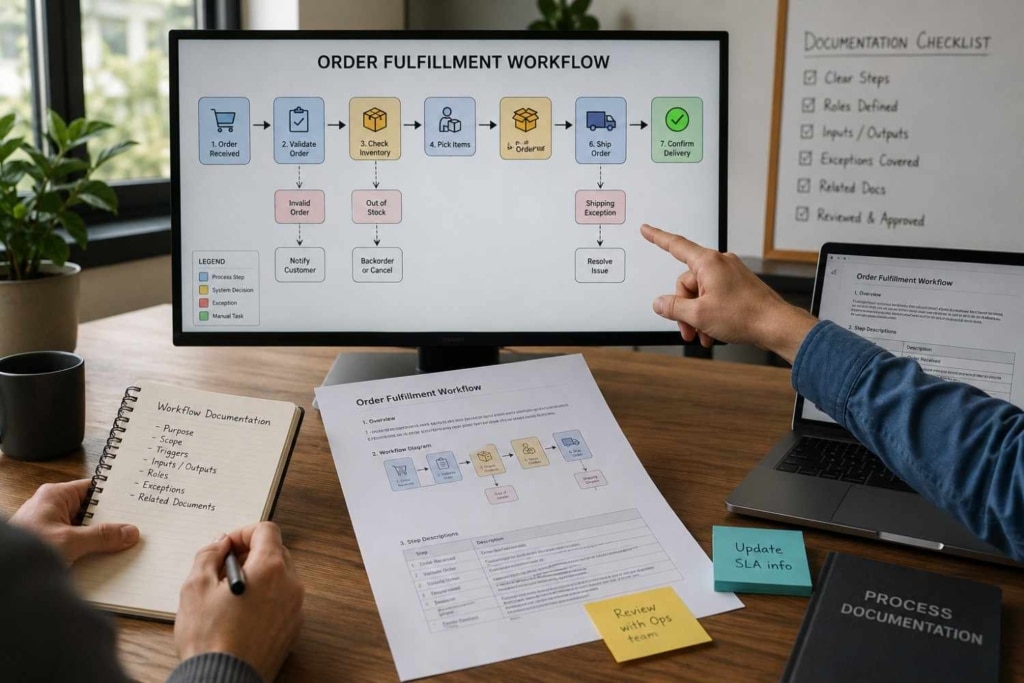
Workflow documentation helps teams follow the same steps every time. It gives everyone a clear guide for how work should be done. This makes daily tasks easier to manage and helps teams stay on track.
Good workflow documentation also helps businesses save time and avoid confusion. Team members know what to do, who is responsible, and what comes next. As a result, work moves faster and with fewer problems.
Faster Onboarding
New employees need time to learn their jobs. A clear workflow document helps them learn faster. Instead of asking many questions, they can follow written instructions. This helps them understand their tasks and become productive sooner.
Benefits include:
- Faster training
- Less confusion
- Better confidence
- Quicker adjustment to new roles
Fewer Mistakes
People make fewer errors when they follow clear steps. Workflow documents show the correct way to complete a task. They help employees avoid missing important details. This leads to better work quality and fewer costly mistakes.
Benefits include:
- More accurate work
- Better quality control
- Reduced rework
- Improved customer satisfaction
Better Communication
Clear processes help teams work together more effectively. Everyone understands their role and responsibilities. Team members know when to pass work to the next person. This reduces misunderstandings and keeps projects moving forward.
Benefits include:
- Clear expectations
- Better teamwork
- Fewer communication gaps
- Stronger collaboration
Improved Productivity
Employees work faster when they know exactly what to do. A documented process removes guesswork. Team members spend less time searching for answers and more time completing important tasks.
Benefits include:
- Faster task completion
- Better use of time
- Increased efficiency
- Higher team performance
Consistent Results
Customers expect the same level of service every time. Workflow documentation helps teams follow the same process for every task. This creates reliable results and builds trust with customers and business partners.
Benefits include:
- Consistent service quality
- Reliable outcomes
- Better customer experiences
- Stronger business reputation
Easier Process Improvement
Businesses grow and change over time. A documented workflow makes it easier to improve existing processes. Teams can review each step and find areas that need improvement. They can remove delays, fix weak points, and create better ways of working.
Benefits include:
- Easier process reviews
- Faster improvements
- Better decision-making
- Reduced bottlenecks
Supporting Business Standards
Many companies use workflow documentation alongside standard operating procedures and real estate practices to create clear and repeatable processes. This approach also supports real estate operating procedures by helping teams follow the same steps when managing listings, client requests, approvals, and other daily tasks.
Key Elements of Workflow Documentation
A good workflow documentation system gives people a clear path to follow. It shows what needs to be done, who will do it, and what tools are needed. When all parts are easy to understand, teams can work faster and with fewer mistakes.
Workflow documentation works best when it includes a few key elements. Each element helps keep tasks organized and easy to follow.
Process Goals
Every workflow should start with a goal. A goal explains what the process should achieve. It gives the team a clear target. When people know the goal, they can focus on the right tasks.
Examples of process goals include:
- Completing a client request
- Approving a document
- Publishing a property listing
- Processing a payment
A clear goal helps everyone understand the purpose of the work.
Step-by-Step Actions
Each workflow should list every step in the correct order. Clear instructions help people complete tasks the same way every time. Each step should be simple and easy to follow.
Good workflow steps should:
- Be written in order
- Use simple language
- Focus on one action at a time
- Avoid confusion
When steps are clear, work moves smoothly from start to finish.
Decision Points
Some tasks require a choice before moving forward. A decision point shows what happens next based on a specific answer or outcome. This helps people know what action to take in different situations.
Examples include:
- Is the form complete?
- Has the payment been approved?
- Does the listing meet company standards?
Decision points help prevent mistakes and keep work on track.
Roles and Responsibilities
Every task should have a person or team responsible for it. People need to know who does each step. This prevents confusion and avoids duplicate work.
Roles and responsibilities help teams:
- Stay accountable
- Work together better
- Reduce delays
- Complete tasks faster
Use job titles instead of employee names whenever possible. This keeps the process useful even when staff changes occur.
Supporting Resources
Supporting resources help people complete their work correctly.
These resources may include:
- Templates
- Checklists
- Forms
- Guides
- Training materials
- Screenshots
Having resources in one place saves time and helps employees find the information they need. For example, a company that helps clients with buying property abroad may provide forms, approval guides, and property review checklists. A business that assists with financing property overseas may use templates and instructions to make each step easier to follow.
Why Do These Elements Matter?
Each part of workflow documentation serves an important purpose. Together, they create a clear process that employees can follow with confidence. When goals, steps, decisions, responsibilities, and resources are documented, teams can work more efficiently. They can reduce errors, improve communication, and achieve better results.
How to Create Workflow Documentation?
Creating workflow documentation does not have to be difficult. A simple and clear process works best. The goal is to show every step needed to complete a task. Good workflow documentation helps teams stay organized. It also helps employees follow the same process every time. Follow the steps below to create a document that is easy to use and easy to update.
Identify the Goal
Start by defining the goal of the process. Ask what result the process should achieve. A clear goal helps everyone understand the purpose of the work.
Think about:
- The desired outcome
- The business objective
- How success will be measured
For example, the goal may be to approve a customer request, publish a property listing, or complete a project on time. A clear goal keeps the process focused. It also helps teams know when the task is complete.
Map the Steps
Next, list all actions needed to complete the task. Write the steps in the order they happen. Make each step clear and easy to understand.
Include:
- Actions that must be completed
- People involved in each step
- Points where work moves to another person
- Tasks that depend on earlier steps
For example:
- Receive the request.
- Review the information.
- Approve or reject the request.
- Notify the customer.
- Close the task.
Simple steps help people follow the process without confusion.
Assign Ownership
Every step should have a person or team responsible for it. Use job titles instead of employee names. This makes the document useful even when staff changes occur.
Examples include:
- Sales Manager
- Customer Service Representative
- Marketing Coordinator
- Team Leader
Clear ownership helps create accountability. It also prevents delays because everyone knows their responsibilities. This approach supports business continuity. Work can continue smoothly even when employees leave or change roles.
Add Visuals
Visuals make information easier to understand. Many people learn faster when they can see a process. Visual aids can help explain steps that may be difficult to describe with words alone.
Useful visuals include:
- Flowcharts
- Diagrams
- Screenshots
A flowchart can show the path of a task from start to finish. Screenshots can show exactly where to click or what information to enter. Visuals make documents easier to follow and easier to remember.
Keep It Accessible
Store documents in a place where everyone can find them. Easy access helps employees use the document when they need it. It also makes updates easier.
Many businesses use tools such as:
These platforms help teams share information and stay connected. Documents should also be reviewed often. Update them when processes change. Regular updates keep information accurate and useful.
For example, businesses that perform real estate competitor analysis often update their processes as market conditions change. Teams may also use real estate tools that require new instructions or updated workflow steps.
Workflow Documentation Best Practices
When creating workflow documentation, keep these tips in mind:
- Use simple words.
- Write clear instructions.
- Keep steps short.
- Use visuals when helpful.
- Assign clear ownership.
- Review documents regularly.
- Store documents in one location.
These practices make workflow documentation easier to use and easier to maintain.
Common Workflow Documentation Mistakes
Workflow documentation helps teams complete tasks the right way. However, many businesses make simple mistakes when creating their documents. These mistakes can lead to confusion, delays, and poor results.
Good workflow documentation should be clear, accurate, and easy to use. By avoiding common mistakes, teams can work more efficiently and achieve better outcomes.
Missing Steps
One of the most common mistakes is leaving out important steps. A missing step can cause confusion and slow down the process. Employees may not know what to do next. This can lead to errors and unfinished tasks.
To avoid this problem:
- Review the entire process.
- Write down every action.
- Ask team members for feedback.
- Test the workflow before sharing it.
Even small details can make a big difference.
Outdated Documents
Processes change over time. A workflow document should change as well. Many businesses create documents and never update them. This can cause employees to follow old instructions that no longer work.
Keep documents current by:
- Reviewing them regularly.
- Updating changes quickly.
- Removing old information.
- Adding new procedures when needed.
Updated documents help teams stay informed and productive.
Unclear Ownership
People need to know who is responsible for each task. When ownership is unclear, work can be delayed. Employees may assume someone else will complete the task.
Clear ownership helps teams:
- Stay accountable
- Complete work faster
- Avoid confusion
- Improve teamwork
Assign each task to a specific role or job title.
Too Much Complexity
Some workflow documents include too much information. Long explanations and complicated language can make documents difficult to follow. Employees may struggle to understand the process.
Keep documents simple by:
- Using plain language
- Writing short instructions
- Focusing on important details
- Breaking large tasks into smaller steps
Simple documents are easier to read and easier to use.
Lack of Visual Aids
Words alone do not always explain a process clearly. Visual aids can help people understand information faster. They can also make complex tasks easier to follow.
Helpful visual aids include:
- Flowcharts
- Diagrams
- Screenshots
- Checklists
Visuals help employees see how a process works from start to finish.
Poor Accessibility
A document has little value if people cannot find it. Some businesses store documents in different locations. Others limit access to only a few employees. This creates frustration and slows down work.
Make workflow documentation easy to access by:
- Storing files in one location
- Giving team members access
- Using shared platforms
- Organizing documents clearly
When employees can find information quickly, they can complete tasks more efficiently.
Why Avoiding These Mistakes Matters
Small mistakes can create large problems over time. Clear and organized workflow documentation helps teams work with confidence. It also improves communication, reduces errors, and supports better results.
The same principle applies in many industries. For example, professionals who want to learn the truth about real estate or gain a better understanding of the real estate market rely on accurate and updated information. The same level of accuracy is important when documenting business processes.